Maryland Transit Administration Workforce and Staffing Report
Created in 2024 and 2025 for the Baltimore Regional Transit Commission and Maryland Transit Administration
Download report excerpt: Compensation Peer Comparison of APTA Salary Survey
Download report excerpt: MTA Core Bus Service Success
Download report excerpt: Full Recommendations and Implementation
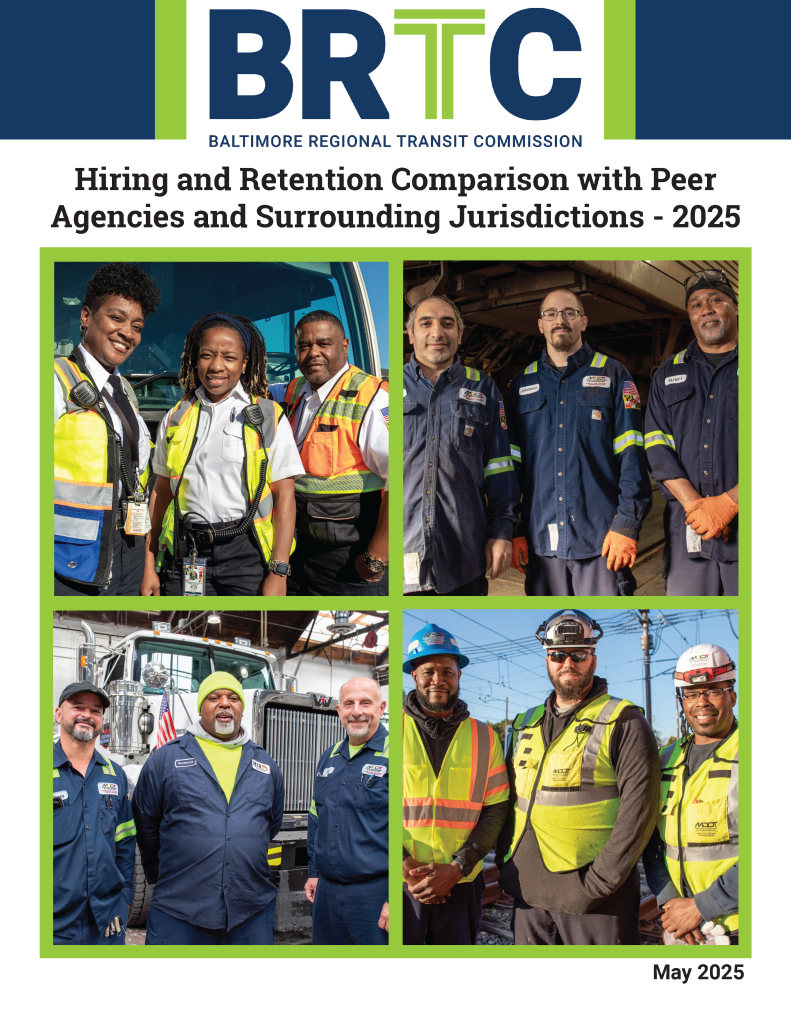
Working as a transit planner and policy analyst for the Baltimore Regional Transit Commission, I led and was the sole author of a comprehensive workforce study of the Maryland Transit Administration. This study updated and expanded the 2022 Joint Chairmen’s Report on hiring and retention. The report examined MTA’s staffing structure, hiring practices, compensation, and retention. It considered historic barriers to increasing staff and multi-agency budget oversight. The findings were then translated into a detailed implementation roadmap for agency leadership and state partners.
I used internal HR and service data, the National Transit Database, and the American Public Transit Association’s 2024 salary survey. With this information, I built peer comparisons and supporting data visualizations. These tools quantified how far MTA salaries lag behind similar agencies and nearby competitors like WMATA and SEPTA. The deficits ranged from roughly 12 to 26 percent relative to the peer average to up to 55 percent relative to the highest-paying peers. I connected bus operator hiring trends to vacancy rates and showed a correlation with more reliable service. An aggressive recruitment push from 2023 to 2024 drove vacancies below 2 percent and cut unserved service by more than 8 percent. This effort enabled planned 2025 service expansions and the addition of 70 operator positions.
The excerpts in this portfolio highlight my work synthesizing these analyses into clear, actionable recommendations. These include strategies to raise compensation. Another strategy is to rebuild in-house project teams and reduce reliance on consultants. Additionally, planning to strengthen transit police staffing and community-based safety models. Together, they show my ability to turn complex workforce and performance data into practical guidance for policymakers and transit executives.
 Home page